

Supporting the Whole Child
Student mental health and well-being have become top priorities for school districts across the country. As educators work to support the whole child, many are recognizing that financial literacy is more than an academic subject, it is a critical life skill that helps students build confidence, reduce future financial stress, and develop healthy decision-making habits that support long-term success.
Financial stress remains one of the leading contributors to anxiety, emotional strain, and mental health challenges in adulthood. Yet many students graduate without the foundational financial knowledge needed to navigate budgeting, saving, credit, debt, investing, or financial responsibility. Schools now have an opportunity to change that trajectory early by helping students develop financial confidence before they enter adulthood.
Research continues to show that financial education positively impacts long-term financial behaviors, including budgeting, saving, debt management, and overall financial decision-making. Studies have also linked financial education to reduced financial stress and improved overall well-being. Student Financial Wellness Survey – Fall 2025 Results | Trellis Strategies
The Connection Between Financial Literacy and SEL
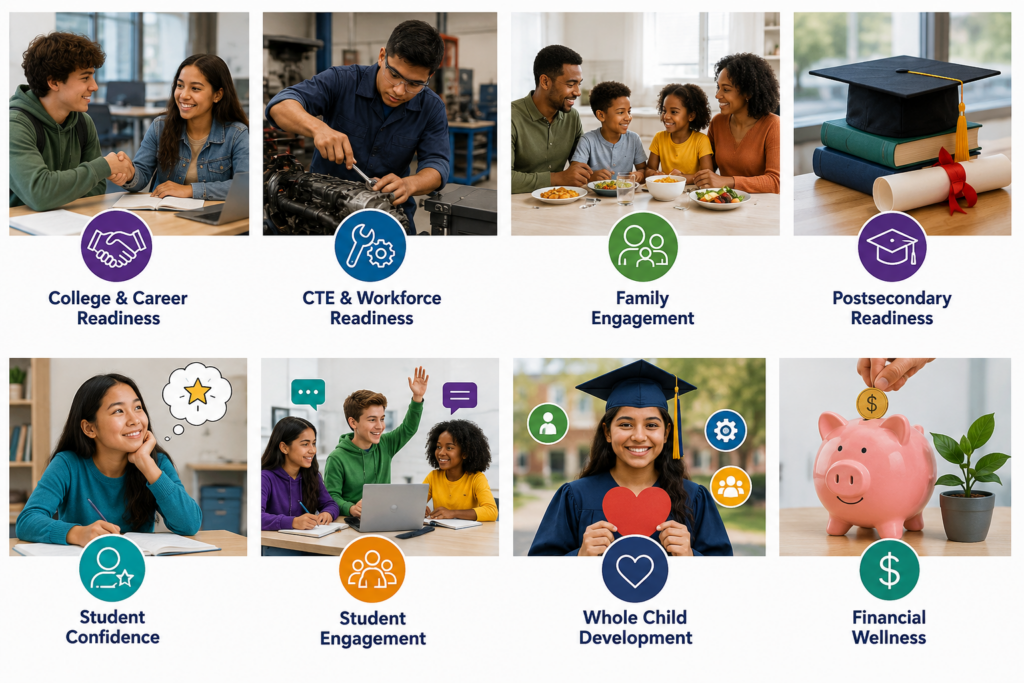
As financial literacy graduation requirements continue expanding nationwide, districts are increasingly connecting financial education to broader Social-Emotional Learning (SEL), mental health, and student well-being initiatives. Financial literacy supports many of the same life skills emphasized in SEL frameworks. When students learn how to manage money, evaluate risks, plan ahead, and make informed decisions, they are also building resilience and practical life skills that contribute to emotional well-being and future stability.
Making Financial Literacy Relevant for Today’s Students
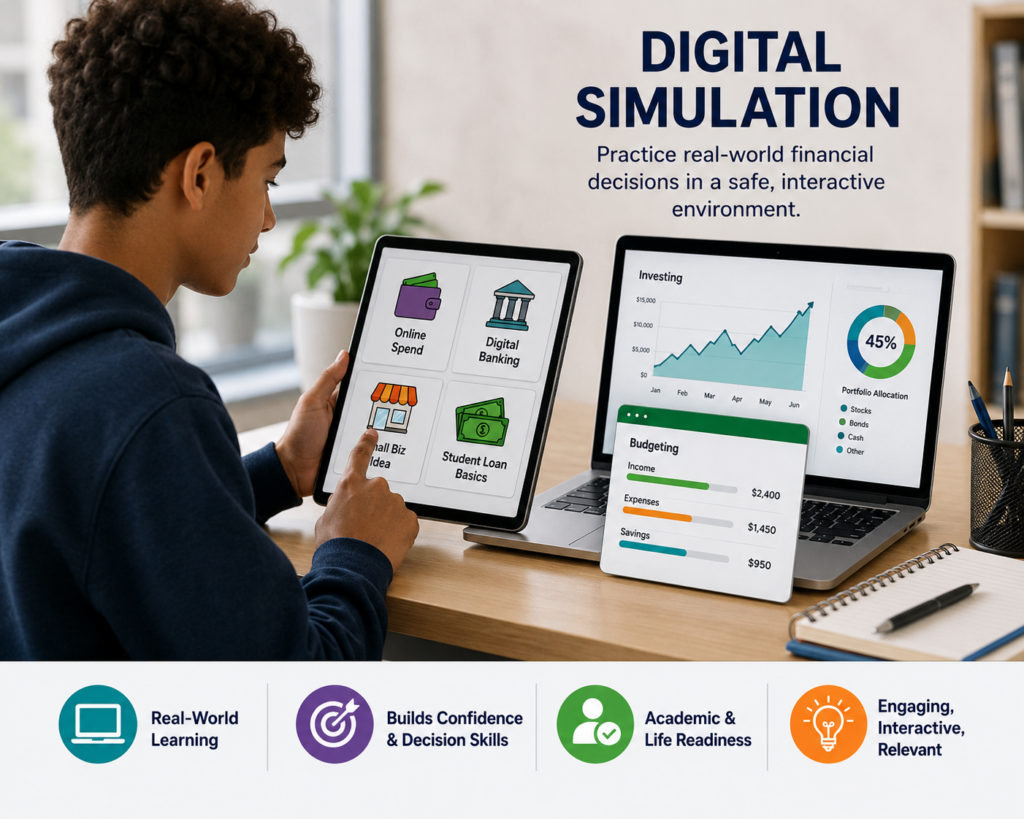
Today’s students are growing up in a world shaped by digital banking, online spending, student loans, entrepreneurship, and social media-driven financial trends. Interactive financial education programs help students make sense of these realities through engaging, real-world learning experiences.
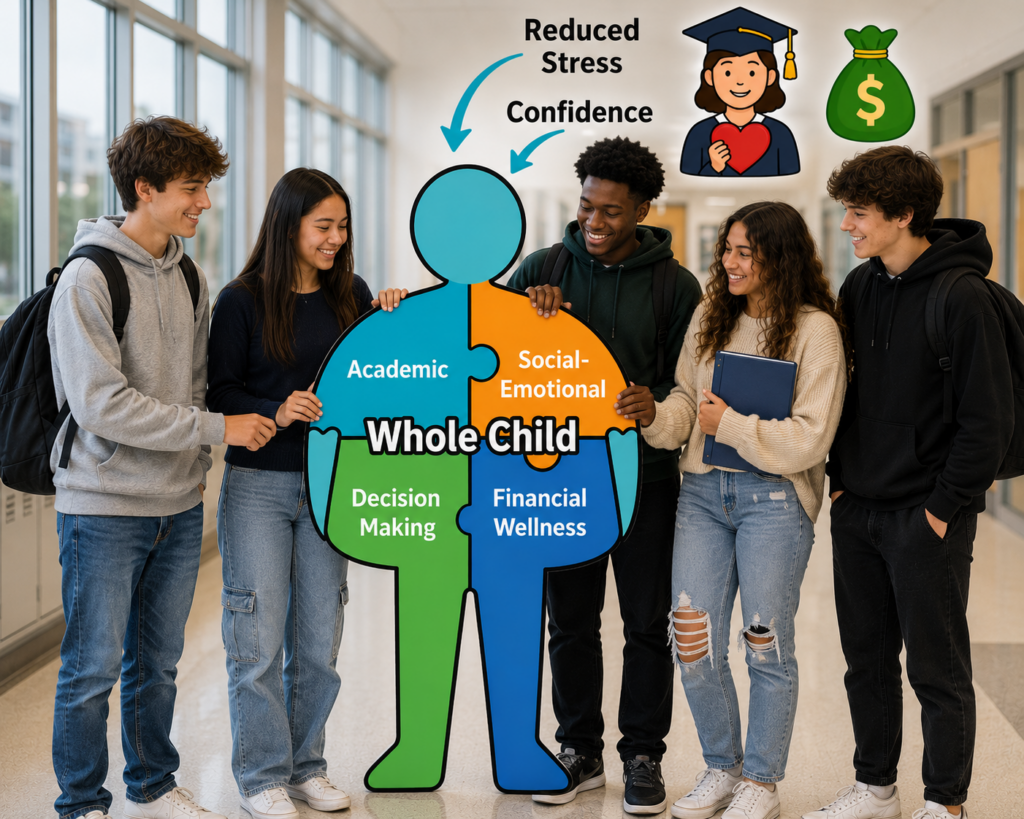
Digital simulations, budgeting exercises, investing activities, and financial decision-making scenarios allow students to actively apply concepts while strengthening both academic and life readiness skills.
Meeting Students Where They Are
When evaluating financial literacy programs, many districts are also looking for solutions that meet students where they are while supporting the needs of the entire student body. Effective financial literacy instruction should be accessible, engaging, and adaptable for diverse learners, including IEP, 504, on-level, intervention, and Advanced Placement (AP) students.
Interactive simulations, budgeting and investing calculators, real-world scenarios, and short-form digital learning experiences can help students connect financial concepts to the everyday decisions they encounter both online and in their daily lives. Flexible learning models and differentiated instruction also help ensure students can engage with content at the pace and level that best supports their learning needs.
District leaders are additionally prioritizing tools that support educators through features such as auto-grading, progress monitoring, standards-aligned lessons, and flexible implementation options that integrate into existing instructional schedules. These supports help make financial literacy both impactful for students and sustainable for teachers.
Supporting District Priorities
Financial literacy has evolved beyond a graduation requirement. District leaders increasingly view it as a foundational life skill that supports student readiness, confidence, decision-making, and long-term success in college, careers, and everyday life.
Goalsetter Classroom: A Life Skills Approach to Student Success
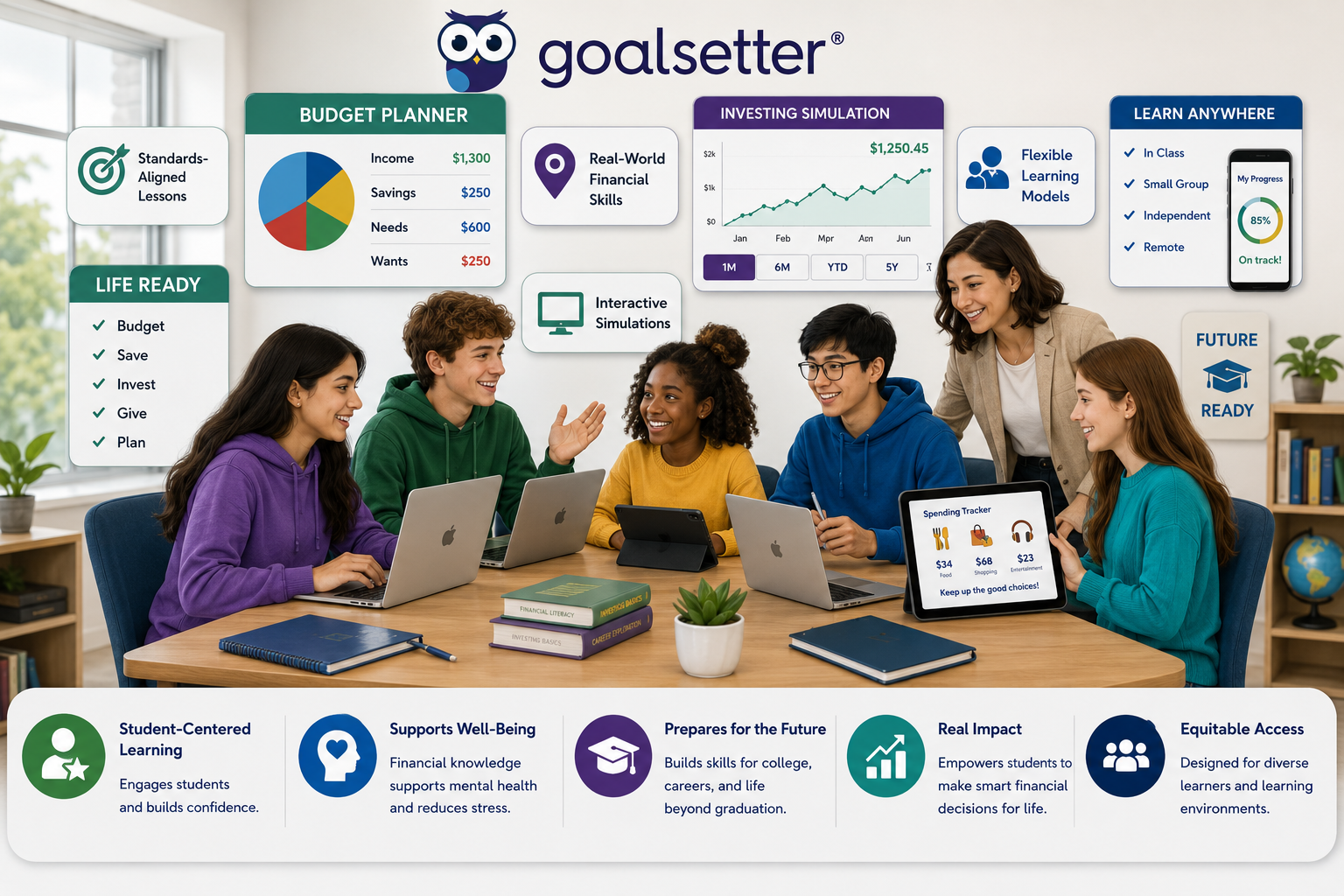
Goalsetter Classroom was designed to support districts through a turnkey, standards-aligned financial literacy platform that combines interactive learning, real-world application, and flexible implementation. The program is aligned to Jump$tart National Standards, Council for Economic Education (CEE) standards, and financial literacy standards across all 50 states.
Goalsetter Classroom Includes:
✓ Standards-aligned digital financial literacy curriculum
✓ Investing and budgeting simulators with real-world application
✓ Teacher-facing AI lesson and assignment generator
✓ Ready-to-use teacher resources and easy implementation
✓ Auto-grading, progress monitoring and reporting tools
✓ Flexible supports for IEP, 504, intervention, on-level, and AP students
✓ Engaging lessons focused on college, career, and life readiness
Interested in learning more?
To learn more about Goalsetter Classroom and partnership opportunities available through 1GPA, visit www.goalsetter.co.